The Conversion & Reposition Question: Is Your Asset Worth More as Something Else?
Omicron Built Environment Intel
Written by Steele Jordan, Vice President, Business Development & Marketing
In 2025 and 2026, a growing number of sophisticated owners in Victoria and Vancouver are asking a question that was barely on the table five years ago: does this building still belong in its current asset class? For owners of mid-class, mid-vintage assets, repositioning or converting to a higher-and-best-use is now a credible strategy, but only when a building diagnostic confirms the bones, the numbers, and the path support it.
Why is Conversion & Reposition now the Discussion?
BC's most established building owners are sitting on assets that no longer perform the way they were underwritten. Hybrid work has compressed office demand. The residential densification play no longer pencils. And for a growing segment of mid-vintage stock, no amount of tenant-improvement budget will close the gap between what the asset is and what the market wants from it.
The more useful question is no longer "how do we fix this building?" It is "what should this building become?"
.jpg)
Key Market Conditions Driving this Shift:
- Downtown Victoria office vacancy at 13.3% — the highest since tracking began in 1987
- BC public sector cutting ~15,000 positions over three years; federal government targeting a 50% reduction in office footprint
- Greater Victoria hotel inventory down 25% since 2016; Vancouver has lost ~550 hotel rooms since 2020
- BC hotel performance at its strongest nationally: 70.4% occupancy / $257 ADR / $181 RevPAR
- North America-wide office-to-apartment conversions hit 90,300 units in the 2026 pipeline, up 28% year over year
Which Assets Are Switching?
Two deals currently underway illustrate the range. 780 Blanshard Street, Victoria, a 1949 heritage building being converted to a 126-room boutique hotel, with full Art Deco restoration and seismic upgrades. 1111 West Hastings, Vancouver, a 12-storey office being converted to a 180-room Le Germain Hotel, winner of the 2026 CoStar Impact Award for Sale/Acquisition of the Year.

Is Your Asset a Candidate?
Buildings that convert successfully tend to share these characteristics:
If most of these apply, the next step is a formal diagnostic, not a feasibility study built on assumptions, but a technical health check that prices what is actually behind the walls.

How Omicron De-Risks a Conversion or Reposition
Conversions punish fragmented teams. When strategy, design, and construction are working from separate contracts, the handoff gaps show up as budget overruns and schedule slippage, exactly the conditions that make change-of-use projects fail.
Omicron's integrated model brings Architecture, Interior Design, Engineering, Construction Management, and Building Renewals under one roof. Andrew Jung and our Building Renewals Team lead the diagnostic; the same team carries the project through design and delivery. The diagnostic covers:
- Structure, envelope, mechanical, electrical, and life-safety review
- Code and zoning gap analysis for the proposed change of use
- Floor plate feasibility against the target program
- Hazmat and decommissioning scope, priced before the pro forma is locked
- An order-of-magnitude capital plan tied to real conditions, not square-foot assumptions
The diagnostic does not always lead to conversion. Sometimes the stronger answer is a reposition within the same asset class. Ayla Calverley and our Corporate Interiors teamwork with owners on exactly this: many office users are looking for functional, affordable, ready-to-occupy space, and buildings that can offer this have a clear leasing advantage over both new supply and buildings sitting dark.
Omicron's Project Experience
Project: The James at Harbour Towers, Victoria
Scope: The project converted 189 older stock hotel rooms to 219 thoughtfully designed market rental units.
Outcome: Market leading asset with very strong market fundamentals.

Project: 411 Dunsmuir, Vancouver
Scope: Full heritage reposition of this 1911 Vancouver Labour Temple building. It included full seismic, HVAC, asbestos abatement, and a 11,000 sq.ft. addition that was key in the reposition.
Outcome: Fully leased modern workspace Leased to Morneau Shepell plus other street front commercial including White Spot, on completion.
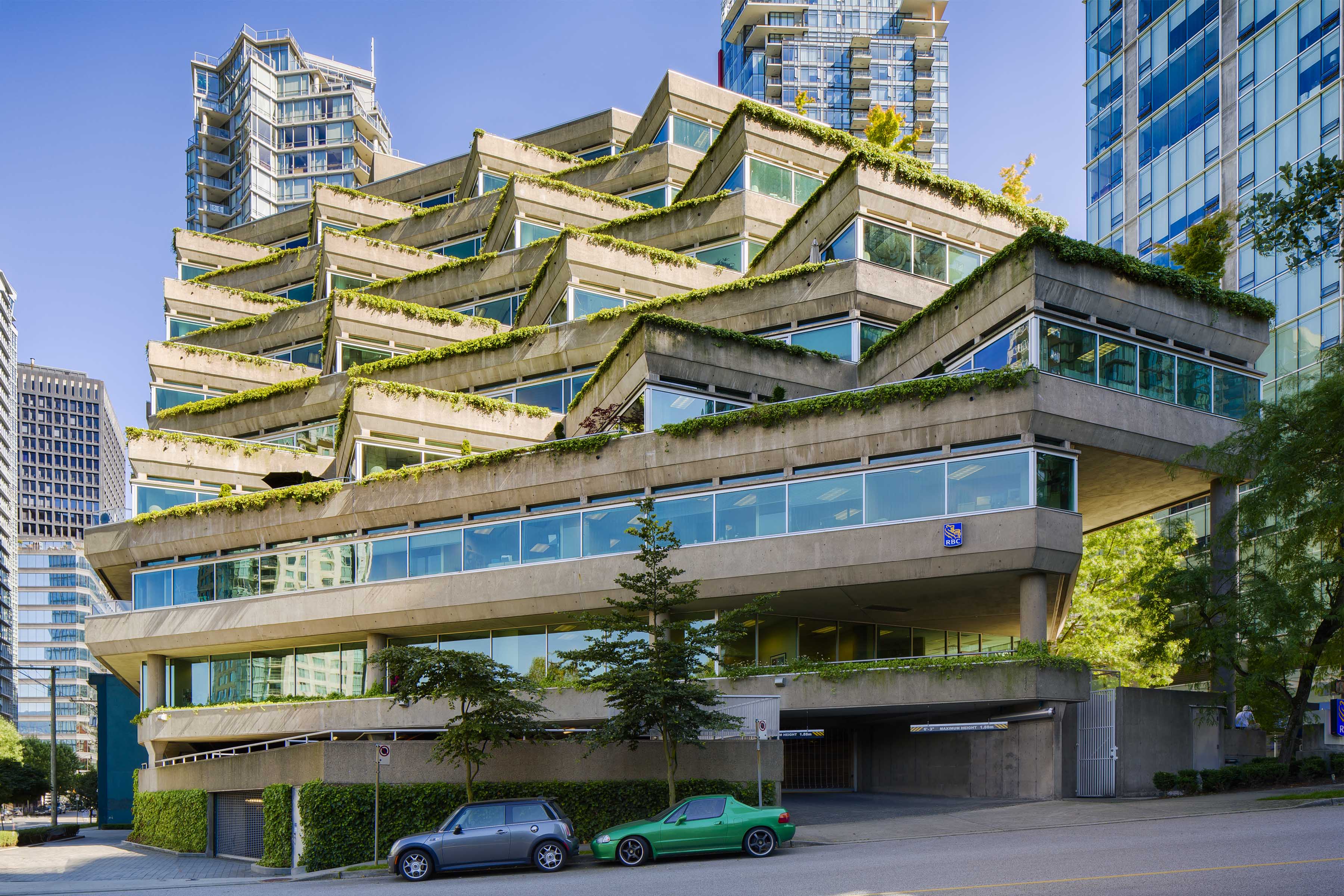
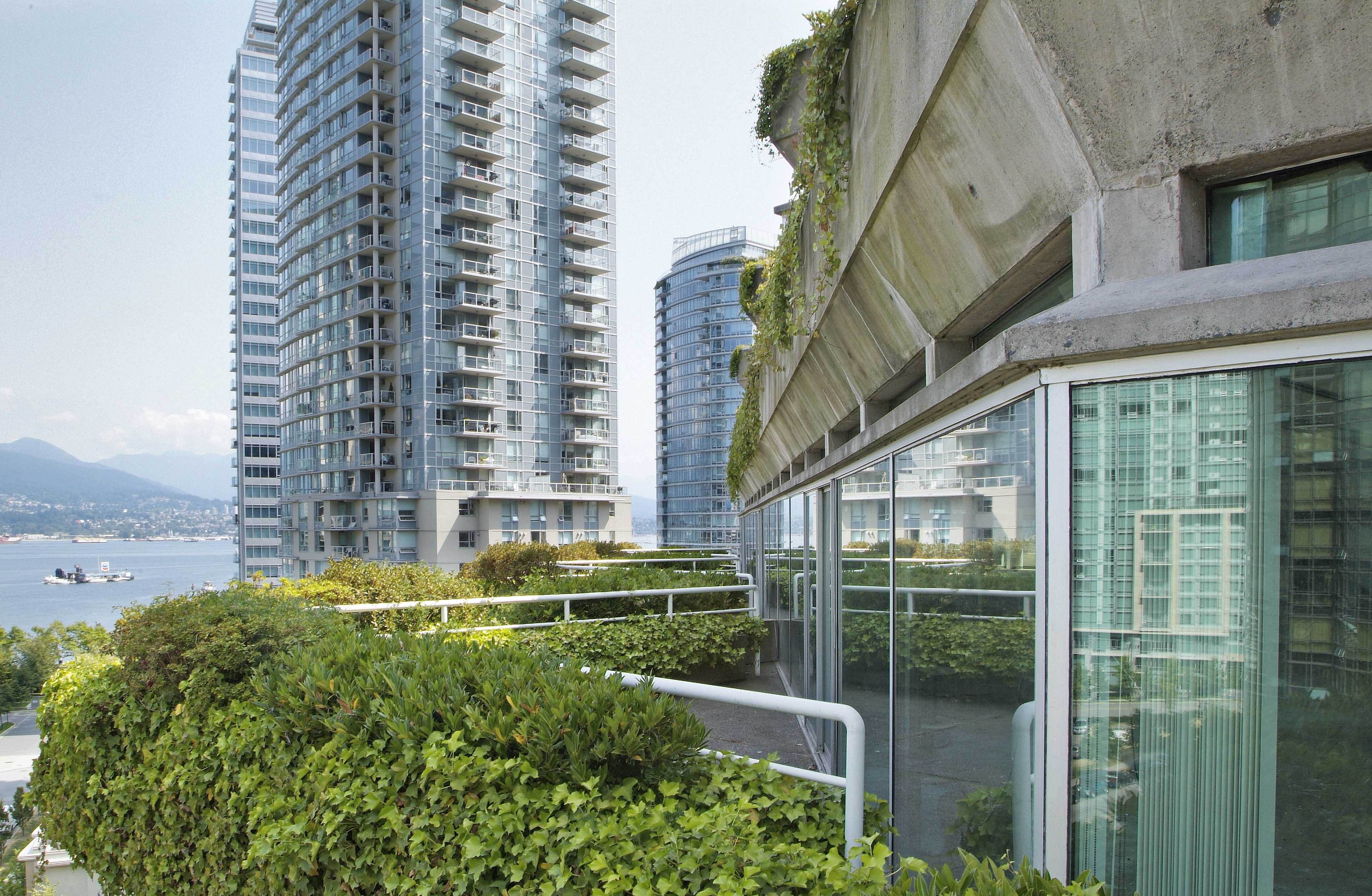
Project: 1285 West Pender (Evergreen Building), Vancouver
Scope: Full building and glazing upgrade to this iconic Arthur Erickson-designed 1980 landmark.
Outcome: A timeless asset that sits in a very unique market position.
Ready to Find Out What Your Building Could Become?
An hour with our team will tell you more than a quarter of market speculation. It costs nothing, it commits you to nothing, and in our experience it is the single most valuable hour an owner can spend on a tired building.
Contact Steele Jordan, Vice President, Business Development & Marketing, to start the conversation.
sjordan@omicronaec.com | 604-836-5801