.jpg)
A Better Way to Design Buildings: Omicron’s Approach to Sustainable Design
By Newton Wong, Sustainable Design Leader
VANCOUVER, BC — During the initial design stages of a project, the focus often revolves primarily around construction costs, material quality, and project schedules. All too often, sustainability takes a back seat—treated as an afterthought or perceived as an additional cost. This approach turns sustainable practices into an "add-on," akin to a bandage, rather than integrating them into the foundation of the design process.
This mindset is encapsulated in a common question among designers: “What is required to meet building code?” which, in essence, translates to: “How can we legally do the least amount of work?” By taking this minimalist approach, designers unintentionally create long-term challenges. Building codes are becoming increasingly stringent to address safety, health, and accessibility concerns. Yet, professionals repeatedly find themselves relearning and adapting to meet these evolving standards—particularly those related to energy efficiency—leading to a labor-intensive cycle of reinventing design practices.
A Shift in Perspective
Instead of spending time and resources relearning and updating design standards every few years, why not design using the best standards available now? Progressive design standards, such as the Canadian Green Building Council's Zero Carbon Building Standard, Passive House Institute, and Net-Zero Building certifications, share a common philosophy: sustainability and integration.
These standards encourage the involvement of all design professionals from the outset, fostering collaboration to create buildings that are cohesive, efficient, and cost-effective. A building designed to these standards predominantly relies on electricity, consuming up to 90% less energy than conventional buildings. Renewable energy sources, like solar panels or geothermal loops, can make these structures virtually energy independent. Imagine the benefits: investing in upfront construction costs and enjoying decades of energy savings and reduced renovation expenses.
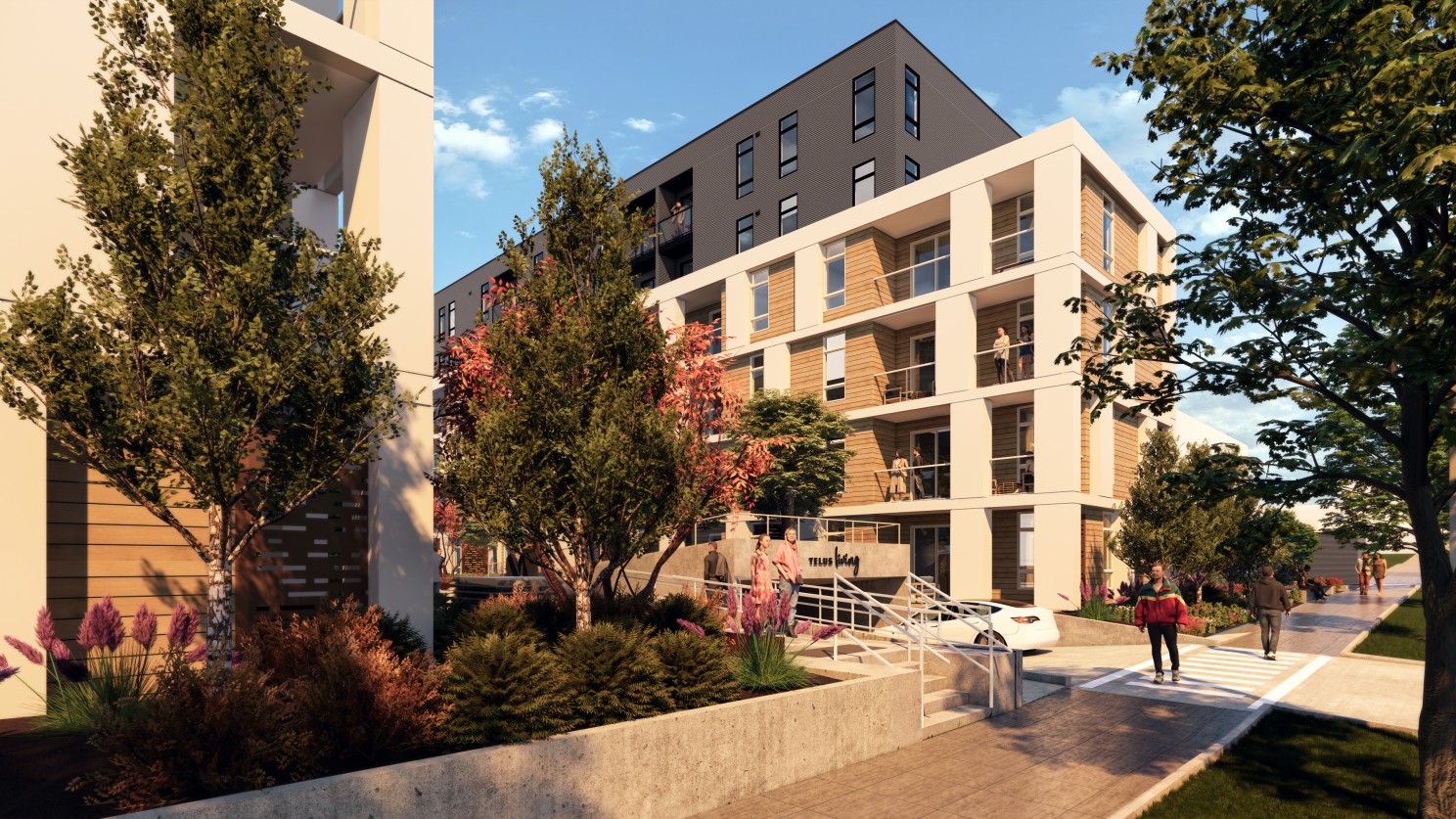
TELUS Living Nanaimo & TELUS Living Sechelt: Sustainability in Action
Guided by this sustainability philosophy, we designed two mid-rise developments in partnership with TELUS —TELUS Living Nanaimo and TELUS Living Sechelt—set to be completed by 2026. In 2024, both projects achieved certification under the Zero Carbon Building - Design Standard, demonstrating the power of integrated architectural and engineering solutions.
By adopting all-electric heating and cooling systems paired with energy recovery ventilators, we ensured the buildings maintain clean, fresh air circulation without the intrusion of pollutants. The thoughtful use of low-carbon materials, such as wood framing, complemented by strategic use of higher-emitting materials like concrete, further underscores the sustainability effort. A Life Cycle Assessment played a pivotal role in measuring and minimizing greenhouse gas emissions from building materials, ultimately reducing total energy consumption and carbon emissions by 30% compared to conventional, code-minimum buildings. Additionally, both projects are expecting to be Salmon-Safe certified, recognizing efforts to protect nearby water quality and fish habitats.
These projects demonstrate that sustainability isn’t just an add-on—it’s a fundamental part of great design. By prioritizing sustainability from the outset, we can create buildings that not only reduce carbon impact but also enhance the communities they serve. The implementation of sustainability at TELUS Living Nanaimo and Sechelt shows that when considered early, it becomes an opportunity to build better, more resilient spaces.
A Vibrant, Sustainable Community
Beyond energy and material efficiency, these developments contribute to building a thriving community. Located in growing neighborhoods, they offer new homes and commercial spaces within a dense footprint.